Core Topic
Human Performance
Research and practitioner analysis on how people perform, adapt and recover under pressure, uncertainty, fatigue and sustained demand.
Start HerePerformance is a system, not a single trait
ALTIUS examines attention, expertise, preparation, recovery, learning and behaviour without reducing performance to motivation or personality alone.
Read: What Is Human Performance? →

Human Performance
Digital systems do not need to damage the brain to affect performance. Frequent interruption, task switching and poorly designed environments are enough to change the conditions in which attention is used.

Education
Learning can look successful long before it becomes durable. Retrieval, spacing and variable practice often make training feel harder because they reveal what smooth repetition can hide.

Human Performance
Rigid thinking is not always stubbornness. Insufficient sleep can impair attention, inhibition and some forms of cognitive flexibility, although effects vary across tasks and individuals.

Decision Making
Decision fatigue is real enough to deserve attention, but the old story that the brain simply burns through a finite glucose-based willpower resource does not fit the evidence. The harder question is what changes after sustained cognitive demand.

Leadership
Repeatedly being right can create a hidden leadership problem: other people stop testing the leader's judgement. The future cost appears when the leader is finally wrong.

Human Performance
Business measures outcomes very well. It is often less precise about the mental conditions under which those outcomes are produced. A mental-performance lens looks at the behaviour before the result.

Communication
People form impressions before they understand the full argument. The practical challenge is to communicate clearly without treating body language as a reliable window into character or competence.

Human Performance
Sleep and rest overlap, but they are not interchangeable. Wearables can reveal useful patterns, yet a sleep score is not a diagnosis and should not be mistaken for complete readiness.

Human Performance
Some people continue to perform well even as exhaustion, detachment and reduced capacity build underneath. Competence can delay the moment when strain becomes visible.
Human Performance
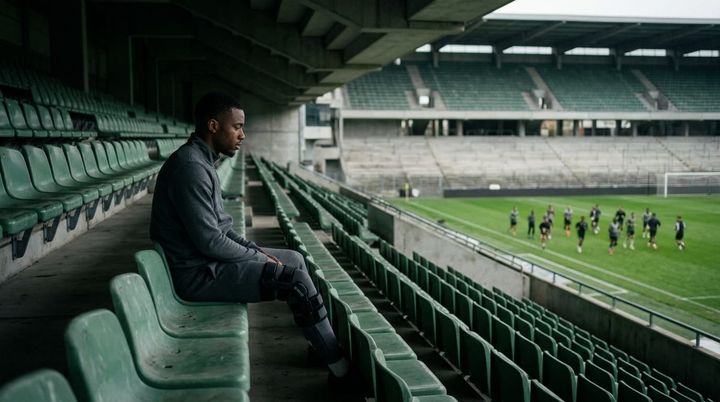
Physical recovery and psychological readiness do not always move at the same speed. Injury can affect fear, mood, confidence, social connection and an athlete's sense of identity.

Human Performance
Insight can be completely accurate and still fail to change behaviour. The missing step is usually not deeper understanding but a way to connect the new response to the moment when the old pattern is triggered.

Psychology
The twelve seconds Nadal spends at the towel box after a missed backhand are not rest. They are the most cognitively disciplined seconds of the entire match.