After the Injury Heals: The Psychological Work of Returning to Sport
Physical recovery and psychological readiness do not always move at the same speed. Injury can affect fear, mood, confidence, social connection and an athlete's sense of identity.
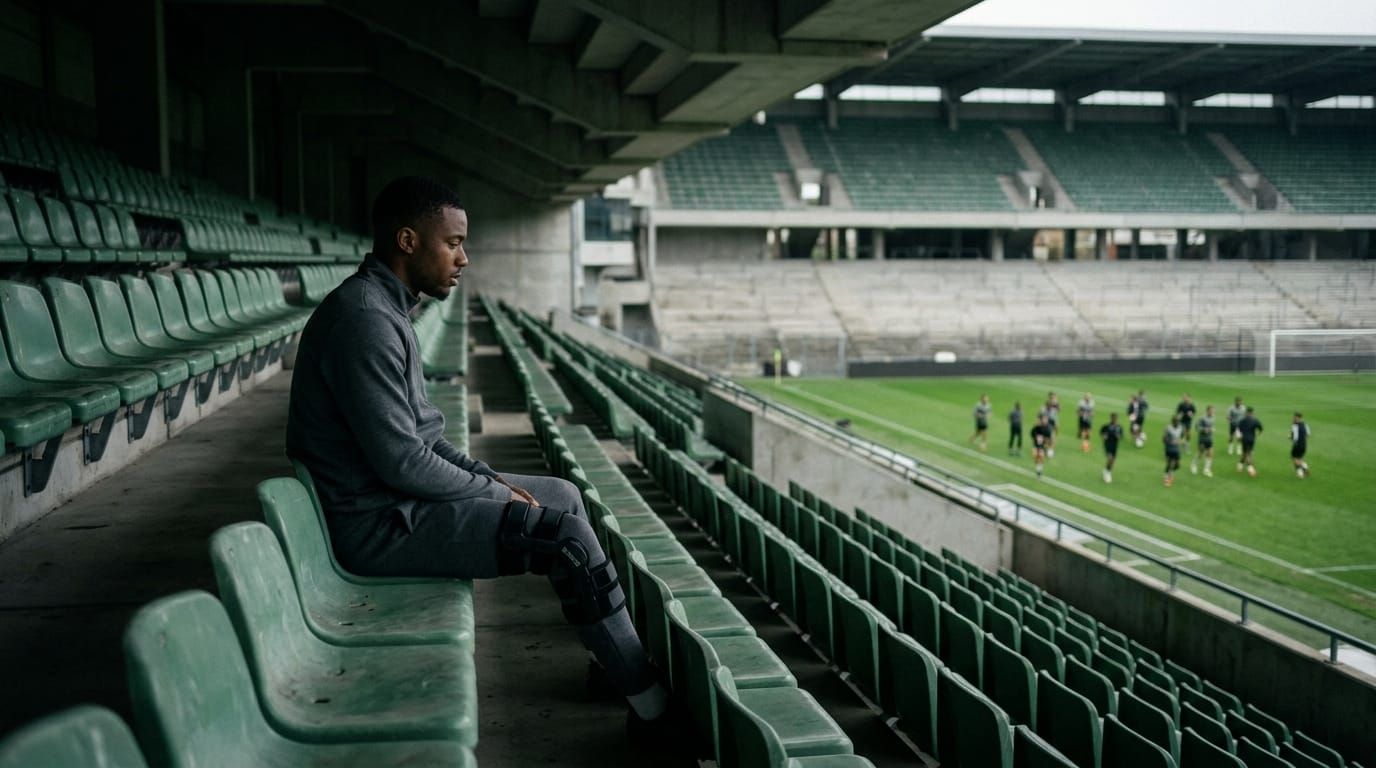
An injury can change more than an athlete's body.
It can change the calendar, the routine, the social environment and the athlete's sense of where they belong. Training disappears. Selection becomes uncertain. Teammates continue without them. Progress is suddenly measured in degrees of movement, swelling, strength and tolerance rather than performance. For some athletes, that disruption remains manageable. For others, injury is accompanied by anxiety, low mood, fear of reinjury, loss of confidence or a much more unsettling question: Who am I when I cannot do the thing around which so much of my life has been organised? That question is important. It is also easy to overstate.
Not every injured athlete experiences an identity crisis. Not every psychological difficulty after injury is caused by athletic identity. And physical rehabilitation does not simply ignore the person while treating the tissue. Modern return-to-sport practice increasingly recognises biological, psychological and social factors. The more accurate point is this: physical recovery and psychological readiness do not always move at the same speed.
Injury changes the athlete's environment as well as the body
A long-term injury removes more than competition. It can remove routine, status, shared goals and daily contact with teammates. It can create uncertainty about contracts, selection, scholarships or future development. For a young athlete, it may interrupt a period in which sport has become one of the main places where competence, friendship and identity are built. Systematic reviews of injured athletes consistently report psychological effects alongside physical ones. In adult athletes, musculoskeletal injury has been associated with greater distress, anxiety and depressive symptoms, lower social functioning and reduced health-related quality of life. In younger athletes, injury can be especially disruptive because identity development is still underway.
These findings describe group-level patterns. They do not mean that an injured athlete will develop a mental disorder. The useful coaching and clinical question is not, Does injury damage mental health? as if the answer were identical for everyone. It is: What has this injury changed for this athlete? Athletic identity describes the degree to which someone identifies with the athlete role. A strong athletic identity is not inherently unhealthy. It can support commitment, belonging, discipline and persistence. Research also shows that it can be associated with useful rehabilitation behaviours and, in some contexts, better functional or return-to-sport outcomes. But the same identity can become a vulnerability when too much of the person's self-definition depends on continued participation.
A 2025 systematic review and meta-aggregation of 24 qualitative studies found two broad patterns after injury: athletic identity disruption and athletic identity reconstruction. Some athletes described a diminished sense of self as physical limitations and separation from sport increased. Others rebuilt their identity through new roles, different forms of participation or a wider understanding of themselves. That distinction matters because it moves the conversation away from a simplistic message that athletes should care less about sport. The goal is not to weaken athletic identity.
It is to make identity less fragile.
A practitioner observation: the athlete may miss more than competition
In mental performance work, the most revealing part of an injury conversation is often not the question, Are you afraid of getting hurt again? It is what comes after. What do you miss most? What feels different about you now? Where do you still feel competent? What has disappeared from your week besides training? What are you imagining when you think about returning?
These are not diagnostic questions. They are ways of understanding the athlete's current performance environment. An athlete who says, "I miss playing," may be describing frustration. Another who says, "I don't know who I am if I'm not in the team," is describing something broader. The intervention should not be identical simply because both athletes have the same injury.
Fear is one of the best-known psychological barriers in return to sport, particularly after serious injuries such as anterior cruciate ligament reconstruction. That fear can be rational. An athlete who has experienced a sudden injury has learned that a movement which once felt ordinary can have major consequences. Confidence is not restored by being told to stop thinking about it.
Research on return-to-sport readiness after ACL reconstruction repeatedly identifies psychosocial factors including fear, anxiety, motivation, perceived control and athletic identity. Concussion research similarly points to fear, emotional factors and contextual influences such as social support and pressure. But fear should not become a catch-all explanation. Some athletes hesitate because of reinjury concerns. Others are physically deconditioned. Some do not trust the repaired body yet. Some have lost their place in the team. Some are under pressure to return. Some are depressed or anxious for reasons that overlap with, but are not reducible to, the injury.
Good support begins by distinguishing these possibilities rather than assuming a single hidden cause.
Medical clearance is not the same as psychological readiness
A doctor can determine whether an athlete meets medical criteria for progression. Rehabilitation professionals can assess strength, function, movement quality and sport-specific tolerance. Those decisions are essential. They are not identical to the athlete feeling ready to compete freely. Return to sport is better understood as a process than as one moment of clearance. Consensus work in sports medicine has explicitly argued for a biopsychosocial approach, recognising that biological, psychological and social factors can all influence return-to-sport decisions and outcomes.
This is particularly important because an athlete can satisfy physical criteria while still carrying uncertainty about movement, role, confidence or identity. The reverse can also happen: an athlete may feel desperate to return before the body is medically ready. Psychological readiness therefore does not replace medical clearance. It belongs alongside it.
One mistake in conversations about athletic identity is to imply that serious athletes should deliberately detach from sport. That misunderstands the value of commitment. A more useful goal is identity breadth: the athlete remains deeply invested in sport while retaining other sources of competence, connection and meaning. For a junior athlete, that might include school, friendships, family roles and interests outside the training environment. For a professional, it may include relationships, learning, mentoring, business interests or responsibilities beyond competition.
This broader identity does not make the athlete less competitive. It creates more places from which the person can answer the question, What can I still do while this part of my life is temporarily unavailable? The 2025 systematic review on athletic identity and injury found that some athletes reconstruct identity through alternative roles such as coaching, volunteering or new sporting participation. That does not mean every injured athlete should be sent to coach children. It shows that identity can change without disappearing.
What coaches and clubs can do differently
The injured athlete should not become invisible simply because they are unavailable for selection. That sounds obvious. In practice, it happens easily. The healthy squad trains, travels and competes. The injured athlete works on a separate timetable with medical staff. Informal contact falls. Conversations become centred on the injury: pain, swelling, strength, dates. A better performance environment preserves belonging while respecting rehabilitation. That can mean keeping the athlete connected to team meetings where appropriate, giving them meaningful but non-tokenistic roles, explaining the return process clearly and avoiding language that equates speed of recovery with toughness.
It also means watching for changes that extend beyond ordinary frustration: persistent low mood, marked withdrawal, severe anxiety, disordered eating, substance misuse, sleep disturbance or significant changes in functioning. Those concerns belong with appropriately qualified health professionals. Mental performance coaching can support adjustment, routines, confidence, attention and return-to-performance work. It should not substitute for clinical assessment or treatment.
An athlete can return to the field before returning to their previous level of performance. That gap can be physical, technical, tactical, psychological or some combination of all four. The first matches back may contain protective movement, slower decisions, more self-monitoring or a heightened reaction to normal discomfort. The athlete may need time to rebuild automaticity under real competitive conditions.
This is not proof that the injury has caused an identity crisis. It is a reminder that competition asks for more than passing a test in rehabilitation. The athlete has to perform while uncertain, tired, challenged and observed again. That is why a useful return plan asks not only, Can the athlete participate? but also, over time, Can they increasingly play with the attention, freedom and confidence their role requires?
The question after injury is wider than "Is the body fixed?"
Sport injury can be a medical event, a performance interruption and, for some athletes, a disruption to identity at the same time. The proportions differ from person to person. That is precisely why the language matters. Calling every difficulty an identity crisis is as unhelpful as pretending identity never matters. Treating every hesitation as fear of reinjury is as limited as treating psychological readiness as irrelevant.
The stronger approach is integrated and individual. Repair the tissue. Rebuild physical capacity. Assess psychological readiness. Preserve social connection. Notice what the injury has changed in the athlete's relationship with sport and with themselves. And when distress becomes persistent, severe or clinically concerning, involve the professionals qualified to assess and treat it. The body and the person are not separate rehabilitation projects.
They are parts of the same return.
ALTIUS Note
This article discusses psychological responses to sport injury through an evidence-informed, non-diagnostic lens. Mental performance coaching can support performance-related adjustment and return-to-performance processes, but it does not replace medical, psychological or psychiatric care where those services are indicated.
Research References
- Johnston, L. H., et al. (2025). Athletic identity and sport injury: a systematic review and meta-aggregation. PubMed PMID 41437404. https://pubmed.ncbi.nlm.nih.gov/41437404/
- Park, A. L., Furie, K., & Wong, S. E. (2023). Stronger Athlete Identity Is a Risk Factor for More Severe Depressive Symptoms After Musculoskeletal Injury in Pediatric Athletes: a Systematic Review. Current Reviews in Musculoskeletal Medicine, 16(5), 220–228. https://doi.org/10.1007/s12178-023-09828-0
- Furie, K., Park, A. L., & Wong, S. E. (2023). Mental Health and Involuntary Retirement from Sports Post-Musculoskeletal Injury in Adult Athletes: a Systematic Review. Current Reviews in Musculoskeletal Medicine, 16(5), 211–219. https://doi.org/10.1007/s12178-023-09830-6
- Reussner, A. K., Bursik, J., Kühnle, F., Thiel, A., & John, J. M. (2024). The meaning of injury to the elite athlete: A systematic review. Psychology of Sport and Exercise, 71, 102571. https://doi.org/10.1016/j.psychsport.2023.102571
- Piussi, R., et al. (2024). Athletic Identity and Sport Injury Processes and Outcomes in Young Athletes: A Supplemental Narrative Review. PubMed PMID 39449485. https://pubmed.ncbi.nlm.nih.gov/39449485/
- Ardern, C. L., et al. (2016). 2016 Consensus statement on return to sport from the First World Congress in Sports Physical Therapy, Bern. British Journal of Sports Medicine, 50(14), 853–864. https://bjsm.bmj.com/content/50/14/853
Related from ALTIUS
- Recovery Is Not the Opposite of Performance. It Is Part of It — Why recovery belongs inside a performance system rather than outside it.
- The Mind Does Not Spectate — Why Mental Coaching Is Not Optional in Sport — How psychological processes interact with sporting performance.
- The Performance After the Mistake — What happens after an error and how athletes regain useful attention.
Further reading
Keep reading ALTIUS
Subscribe for new essays and analysis, or sign in if you already have an account.