
Human Performance
Why Skilled People Sometimes Fail When the Stakes Rise
Pressure does not erase expertise. It can redirect attention, increase self-monitoring or fill limited mental capacity with consequences that compete with the task.
Evidence-led analysis of Human Performance, Decision Making, Leadership and the forces that shape how people perform under pressure.
Leadership is not a title or a universal personality type. It is the practice of creating direction, conditions for coordinated action and accountability under real constraints.

Pressure does not erase expertise. It can redirect attention, increase self-monitoring or fill limited mental capacity with consequences that compete with the task.

A serious political consultant is not paid to protect the candidate from contradiction. The job is to improve decision quality and keep inconvenient information alive long enough to matter.

A slogan can compress a strategy. It cannot create one. Before a campaign communicates, it has to understand the candidate, citizens, contest, organisation and constraints.

Many athletes believe enjoying competition makes them less competitive. The opposite is often true. When athletes embrace challenge instead of fearing failure, they stay curious, adapt more effectively under pressure and unlock more consistent, resilient and sustainable high performance.
Explore ALTIUS through its core authority areas: Human Performance, Decision Making and Leadership, supported by research in psychology, communication, sport and society.

Learning can look successful long before it becomes durable. Retrieval, spacing and variable practice often make training feel harder because they reveal what smooth repetition can hide.
Many athletes believe enjoying competition makes them less competitive. The opposite is often true. When athletes embrace challenge instead of fearing failure, they stay curious, adapt more effectively under pressure and unlock more consistent, resilient and sustainable high performance.

Rigid thinking is not always stubbornness. Insufficient sleep can impair attention, inhibition and some forms of cognitive flexibility, although effects vary across tasks and individuals.

Decision fatigue is real enough to deserve attention, but the old story that the brain simply burns through a finite glucose-based willpower resource does not fit the evidence. The harder question is what changes after sustained cognitive demand.

Repeatedly being right can create a hidden leadership problem: other people stop testing the leader's judgement. The future cost appears when the leader is finally wrong.
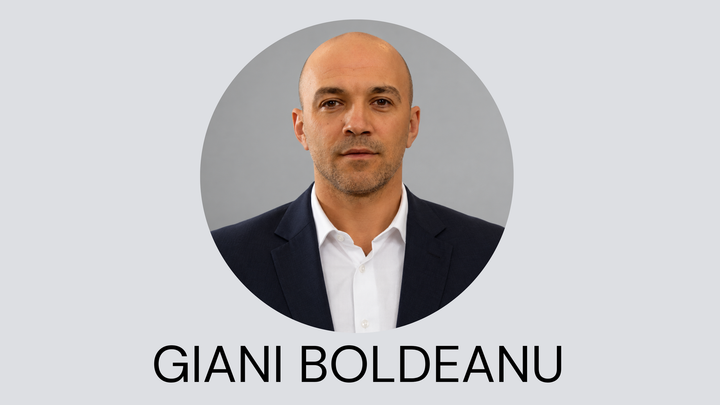
Giani Boldeanu is a UK-based consultant, Mental Performance Coach and Executive Coach working across political performance, leadership, decision making and human performance, shaped by seven years of military service and 19+ years in performance coaching.

Business measures outcomes very well. It is often less precise about the mental conditions under which those outcomes are produced. A mental-performance lens looks at the behaviour before the result.

People form impressions before they understand the full argument. The practical challenge is to communicate clearly without treating body language as a reliable window into character or competence.

Alberto Cei is a leading sport and performance psychologist, university professor and author. Across eight Olympic Games, he has supported athletes who won 13 Olympic medals and has worked extensively with elite athletes, coaches, referees and organizations.

Sleep and rest overlap, but they are not interchangeable. Wearables can reveal useful patterns, yet a sleep score is not a diagnosis and should not be mistaken for complete readiness.

Some people continue to perform well even as exhaustion, detachment and reduced capacity build underneath. Competence can delay the moment when strain becomes visible.
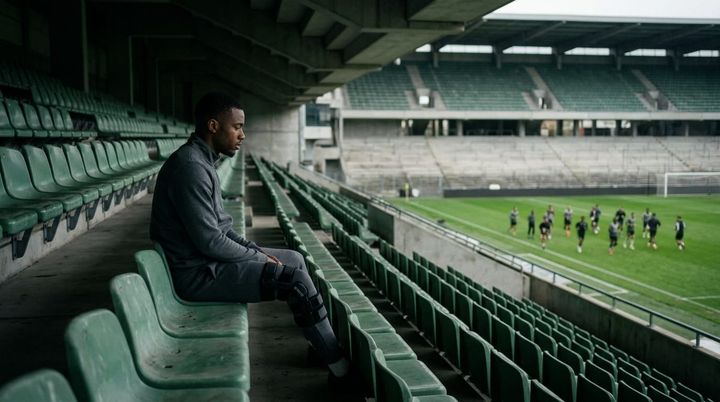
Physical recovery and psychological readiness do not always move at the same speed. Injury can affect fear, mood, confidence, social connection and an athlete's sense of identity.