Why Enjoying Competition Makes You More Competitive
Many athletes believe enjoying competition makes them less competitive. The opposite is often true. When athletes embrace challenge instead of fearing failure, they stay curious, adapt more effectively under pressure and unlock more consistent, resilient and sustainable high performance.
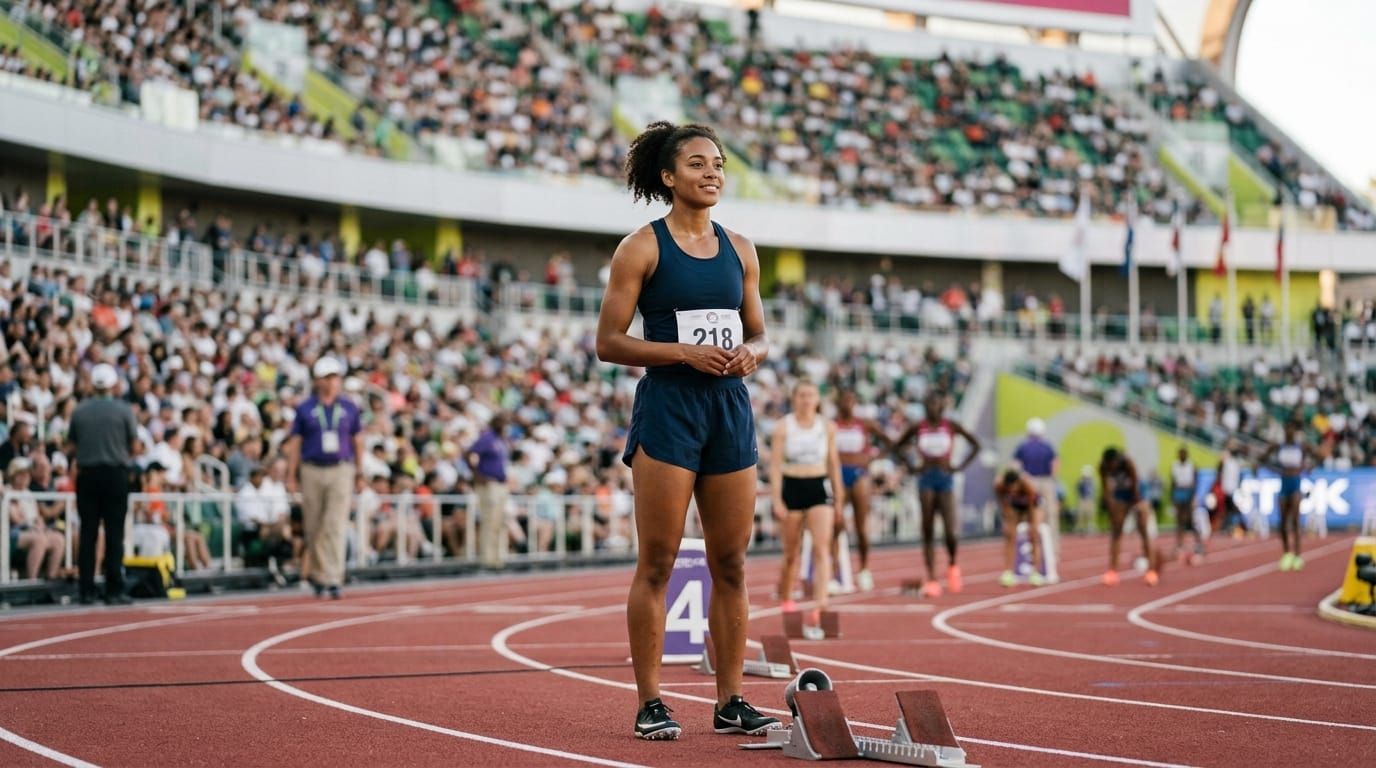
Many athletes believe that enjoying competition disappears the moment results begin to matter. The evidence from elite performance suggests the opposite. The athletes who sustain excellence over time are often those who learn to experience competition not as a threat, but as an opportunity to test themselves.
Many young athletes grow up believing that serious competition leaves no room for enjoyment.
Once rankings, selections and championships become important, they assume they must become permanently tense, cautious and consumed by the fear of failure. Enjoyment, they think, belongs to childhood or recreational sport. High performance, by contrast, is supposed to be defined by sacrifice, pressure and constant seriousness.
It is a belief that seems logical.
It is also one of the most limiting beliefs an athlete can develop.
When competition becomes something to survive
Athletes who compete primarily to avoid losing often begin to see mistakes differently. Errors stop being part of learning and become evidence that something is going wrong.
Every mistake feels expensive.
Every point seems decisive.
Every competition becomes a judgment on their ability rather than an opportunity to express it.
This creates a self-reinforcing cycle. The more athletes fear making mistakes, the more they attempt to control every movement consciously. Their attention shifts away from the task itself and toward the consequences of failure. Confidence gives way to caution, and performance becomes increasingly restricted.
Pressure is interpreted in much the same way.
Instead of recognising pre-competition nerves as a natural response to an important challenge, many athletes conclude that feeling pressure means they are not ready. Rather than using emotional arousal as a source of energy, they spend valuable mental effort trying to eliminate it.
The result is that competition becomes something to endure instead of something to embrace.
The competitors who keep learning
Elite performers often approach competition differently.
They do not compete because they enjoy winning alone. They enjoy solving the problems that competition presents.
Every opponent offers new information.
Every difficult moment provides feedback.
Every mistake becomes an opportunity to adjust.
Rather than seeing competition as a final examination of their talent, they experience it as a dynamic learning environment. Curiosity keeps their attention focused on the next decision instead of the previous error. That ability to remain engaged allows them to adapt more quickly, recover more effectively and perform with greater consistency.
Pressure does not disappear.
It simply changes meaning.
Instead of signalling danger, it becomes evidence that the moment matters.
Enjoyment is not the opposite of ambition
Some people confuse enjoyment with relaxation or a lack of seriousness.
Elite sport demonstrates the opposite.
Enjoyment does not mean taking competition lightly. It means becoming fully engaged in the challenge. Athletes who genuinely enjoy competing often display extraordinary levels of discipline, commitment and intensity because they are absorbed in the process itself rather than paralysed by the outcome.
Winning still matters.
But it is no longer the only thing that matters.
They remain invested in making good decisions, executing skills under pressure and responding intelligently to setbacks. Ironically, this process-focused mindset often produces better results precisely because it frees athletes to perform closer to their true potential.
The coach's role
Coaches shape how athletes interpret competition long before athletes develop those beliefs themselves.
If every conversation revolves around results, rankings or mistakes, athletes quickly learn that winning is the only acceptable outcome. Performance becomes something to protect rather than something to explore.
The most effective coaches teach athletes to evaluate different measures of success: the quality of their decisions, their concentration, their emotional control, their willingness to recover after setbacks and their commitment throughout the contest.
Winning remains the objective.
Fear of losing no longer becomes the organising principle.
The parents' role
Parents influence the emotional meaning of competition more than they often realise.
The first conversation after a match matters.
Questions focused exclusively on the result—"Did you win?"—can unintentionally reinforce the belief that performance is measured only by the scoreboard.
More helpful questions invite reflection:
- How did you compete?
- What did you learn today?
- What challenged you most?
- What would you like to improve next time?
When young athletes know that a disappointing result will not change the way they are valued at home, they compete with greater freedom. They become more willing to take appropriate risks, recover more quickly from setbacks and continue developing even after difficult performances.
The paradox of competition
The athletes who enter competition thinking only about winning often perform below their capabilities because their attention is consumed by the consequences of failure.
Those who enjoy the challenge experience something different.
They remain curious.
They adapt.
They recover.
They continue making decisions instead of dwelling on mistakes.
Enjoyment is not the opposite of competitiveness.
It is often one of its foundations.
The athletes who enjoy competing are not less ambitious. They are simply less distracted by fear. Their attention stays where performance actually happens—in the present moment, on the next decision, against the next challenge.
Over time, that mindset does more than make competition more enjoyable.
It makes sustained excellence far more likely.