What Power Reveals About Character
Power does not simply expose a hidden true self. It changes permission, goals, social distance and access to correction. Character still matters, but so does the system around the person.
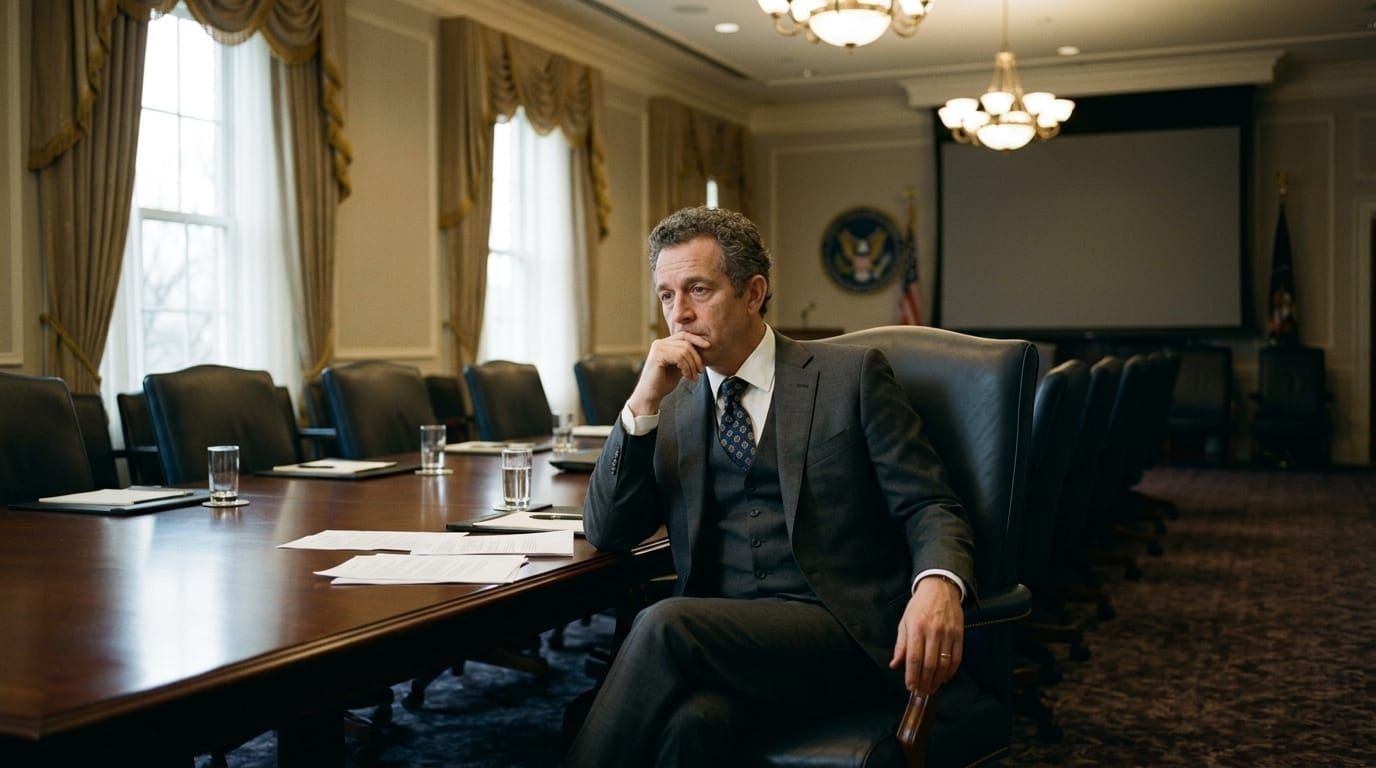
Power does not reveal a hidden true self in one clean moment.
It changes the conditions in which the self operates. A person who enters public office may still have the same values, habits and temperament they had before. But the environment around them changes quickly. People wait longer before interrupting. Suggestions can begin to sound like instructions. Disagreement becomes more carefully worded. Access increases. Consequences can be delayed. The person may not have changed overnight.
The amount of resistance around them has. That is why the old phrase “power reveals character” is useful, but incomplete. Power can reveal. It can also amplify. It can distance. And it can insulate. For political leadership, I find four questions more useful than the slogan itself: What does power permit? What does it amplify? Whose reality becomes easier to miss? Who can still correct the person? Those four questions tell us more than whether somebody appears “good” or “bad”.
Permission: what becomes easier to do?
Most behaviour is shaped by both character and constraint. A person may behave respectfully because they value respect. They may also behave respectfully because disrespect has consequences. A manager may consult colleagues because they believe in consultation. They may also consult because they lack the authority to act alone. Power changes that balance. Classic work by Dacher Keltner, Deborah Gruenfeld and Cameron Anderson proposed that greater power tends to increase approach-related behaviour: attention to rewards, action and reduced inhibition. Lower power tends to increase vigilance, threat sensitivity and social constraint.
That theory does not say that powerful people become selfish. It says that power changes the behavioural environment. More options become available. More preferences can be acted on. More decisions can be made without immediate permission from others. This is where character becomes more visible. The important question is not: Does power change the person? It is: What does the person begin doing once fewer people can stop them? That can reveal generosity. It can reveal impatience.
It can reveal courage. It can reveal entitlement. The office does not decide which one appears. It changes the amount of permission available.
Amplification: which goal becomes stronger?
Power does not give everyone the same motive. That is one of the most important corrections to the idea that power simply corrupts. Ana Guinote’s review of the power literature describes power as an intensifier of goal-directed behaviour. In other words, power can make it easier for people to pursue goals that are already salient to them. That is a more realistic model. A person strongly oriented towards institutional reform may use authority to push through resistance.
A person strongly oriented towards status may become more sensitive to symbols of rank and access. A person strongly oriented towards personal advantage may gain more opportunity to pursue it. The same authority can therefore produce different behaviour. Research by Katherine DeCelles and colleagues supports this conditional view. In their studies, the relationship between power and self-interested behaviour depended partly on moral identity. Power did not move everyone in the same direction.
Research by Stéphane Côté and colleagues found a similar pattern in another domain: prosocial orientation was more strongly associated with empathic accuracy when power was high. The implication is important. Power can magnify motives. It does not invent all of them. That is why prior behaviour matters. Not because the past predicts perfectly. Because it gives us evidence about which goals are already active before authority makes them easier to pursue.
Power can make self-expression easier
There is another effect that deserves attention. People with greater power may feel less pressure to adjust themselves to other people’s expectations. That can increase self-expression. In some contexts, that is useful. A leader with enough authority may be willing to challenge an unpopular assumption or make a difficult decision others avoided. But self-expression is not the same as good judgement.
A leader can become more “authentic” and still express poor instincts. Impatience can be authentic. Vanity can be authentic. Suspicion can be authentic. Contempt can be authentic. Public office does not require every reaction to be expressed. It requires judgement over which reactions deserve authority. So the useful question is not: Am I being myself? It is: Which part of myself am I allowing the office to strengthen?
Authority changes more than internal psychology. It changes information flow. People behave differently around power. Some become more careful. Some soften bad news. Some avoid disagreement. Some wait for the senior person to speak first. This matters because leaders do not make decisions only from what they know. They make decisions from what reaches them. Research by Adam Galinsky and colleagues found that experimentally induced power was associated with reduced perspective-taking on several tasks, including lower sensitivity to other people’s visual and emotional perspectives.
Those studies do not prove that public officials lose empathy when elected. They used laboratory manipulations and specific tasks. But the risk they identify is credible: when dependence on others falls, the effort spent understanding their perspective may also fall. In political life, distance is partly unavoidable. No minister, mayor or party leader can personally experience every consequence of every decision. The problem begins when structural distance becomes psychological confidence.
When the leader starts assuming that limited contact is complete understanding. That is where public office can become dangerous. Not because the person stopped caring. Because the information environment became narrower than they realised.
Insulation: who can still say no?
This may be the most important test of power. Before authority grows, people receive correction from many directions. A proposal can be refused. A colleague can withdraw cooperation. A superior can overrule them. A group can reject the idea. As power grows, some of those constraints weaken. The person is still criticised, sometimes constantly. But criticism can also become easier to explain away. An opponent criticises because they are an opponent.
A journalist investigates because they want a story. An adviser disagrees because they are disloyal. A civil servant raises a problem because they are resistant to change. A voter objects because they are misinformed. Any one of those explanations can occasionally be true. The danger begins when every challenge is processed through the same explanation. Then criticism still exists. Correction does not.
That is insulation. Power is not destiny. Institutional design matters. Research by Diana Rus, Daan van Knippenberg and Barbara Wisse found across three studies that accountability reduced self-serving behaviour among higher-power leaders more strongly than among lower-power leaders. A 2024 laboratory experiment on centralised punishment reached a related conclusion: greater power produced more abuse over time in that setting, while transparency reduced abuse in the high-power condition.
These are laboratory and organisational studies, not replicas of public office. They still support an important principle: constraints matter most where discretion is greatest. That principle should not depend on whether we trust the individual. Trust and accountability solve different problems. Trust concerns intention. Accountability concerns structure. Good institutions need both.
Character is not a substitute for safeguards
Political systems often search for the “right person”. The honest candidate. The competent candidate. The principled candidate. Those qualities matter. But a system that depends entirely on personal virtue is fragile. Even well-intentioned people become defensive. They become tired. They develop loyalties. They become attached to their own explanation of events. They learn which criticism can be ignored. They may begin to confuse agreement with competence and loyalty with truth.
This is not a diagnosis of politicians. It is a basic human-performance problem. The stronger the authority, the more important the correction mechanisms become. Independent oversight. Transparent processes. Protected dissent. Clear limits on discretion. A credible possibility of losing office. These do not assume that the leader is corrupt. They assume that no person should be asked to self-correct perfectly while also holding significant power.
People do not need national office before they show how they use authority. Most exercise smaller forms of power first. They chair meetings. Manage budgets. Select staff. Control access. Choose who is heard. Distribute credit. Decide whose mistake is forgiven. Those situations matter. They show how the person behaves when others depend on them. Does the person become more respectful when someone has less status — or less?
Can a junior colleague correct them? Do they share credit? Do the rules still matter when the rules become inconvenient? Can they change a decision without pretending the old decision was never theirs? These are not perfect predictors of future political conduct. They are better evidence than declarations of character. Intentions are cheap before consequences arrive. Behaviour under minor discretion tells us more.
The correction test matters more than the confidence test
Politics rewards confidence. Campaigns reward certainty. Public communication often punishes hesitation. That creates a risk. We can become impressed by someone’s ability to project conviction without asking how they respond when conviction is challenged. I would rather know: What happens when the adviser says the strategy is wrong? What happens when the evidence contradicts the preferred story? What happens when somebody with less status points out an error?
What happens when changing course is embarrassing? Those moments reveal something important. Not whether the person is “strong”. Whether the person can still be corrected. In public life, that is a more valuable capacity than confidence alone. No framework can predict exactly how someone will behave in office. This one is not a psychological test. It is a way to structure observation.
Permission
What can the person now do without asking anyone else? Where has resistance disappeared? Which actions have become easier because authority increased?
Amplification
Which goals are receiving more energy? Public value? Status? Control? Recognition? Institutional reform? Personal advantage? The question is not which goal sounds noble. It is which goal behaviour repeatedly reveals.
Distance
Who is affected by decisions but rarely present in the room? Whose information arrives filtered? Who has stopped speaking directly?
Insulation
Who can disagree without paying a personal price? Which people are rewarded for saying no? Which facts can still change the leader’s mind? These four dimensions apply to the person and the institution at the same time. That is why they are useful.
What power really reveals
Power does reveal character. Just not in the simple way the phrase suggests. It reveals what a person does when permission expands. It reveals which goals gain force. It reveals how much social distance they tolerate. It reveals whether they preserve correction once correction becomes inconvenient. But it also reveals the quality of the institution around them. A system that rewards deference will produce different behaviour from one that protects challenge.
A role with broad discretion and weak transparency will create different risks from one with clear limits and visible accountability. So I would not reduce political behaviour to character alone. And I would not reduce it to institutions alone. The more useful model is the interaction between three things: the person, the role and the system around the role. That is what power changes.
That is also where responsibility sits. The person matters. The structure matters. And the strongest leaders are not those who assume their character makes safeguards unnecessary. They are the ones who preserve the systems capable of telling them when they are wrong.
ALTIUS Note
This article is nonpartisan and does not assess any current political actor. It draws on experimental and organisational research about social power, perspective-taking, accountability and goal-directed behaviour. Laboratory findings should not be treated as direct predictions of how any individual officeholder will behave.
Research References
- Keltner, D., Gruenfeld, D. H., & Anderson, C. (2003). Power, approach, and inhibition. Psychological Review, 110(2), 265–284. https://doi.org/10.1037/0033-295X.110.2.265
- Guinote, A. (2017). How Power Affects People: Activating, Wanting, and Goal Seeking. Annual Review of Psychology, 68, 353–381. https://doi.org/10.1146/annurev-psych-010416-044153
- DeCelles, K. A., DeRue, D. S., Margolis, J. D., & Ceranic, T. L. (2012). Does power corrupt or enable? When and why power facilitates self-interested behavior. Journal of Applied Psychology, 97(3), 681–689. https://doi.org/10.1037/a0026811
- Côté, S., Kraus, M. W., Cheng, B. H., Oveis, C., van der Löwe, I., Lian, H., & Keltner, D. (2011). Social power facilitates the effect of prosocial orientation on empathic accuracy. Journal of Personality and Social Psychology, 101(2), 217–232. https://doi.org/10.1037/a0023171
- Galinsky, A. D., Magee, J. C., Inesi, M. E., & Gruenfeld, D. H. (2006). Power and perspectives not taken. Psychological Science, 17(12), 1068–1074. https://doi.org/10.1111/j.1467-9280.2006.01824.x
- Rus, D., van Knippenberg, D., & Wisse, B. (2012). Leader power and self-serving behavior: The moderating role of accountability. The Leadership Quarterly, 23(1), 13–26. https://doi.org/10.1016/j.leaqua.2011.11.002
- Hoeft, L., Mill, W., & Theilen, B. (2024). Abuse of power: An experimental investigation of the effects of power and transparency on centralized punishment. Journal of Economic Behavior & Organization, 220, 305–324. https://doi.org/10.1016/j.jebo.2024.02.003
Related from ALTIUS
- What Is Political Performance? — A framework for judgement, pressure, communication and behaviour in public life.
- The Cost of Always Being Right — Why certainty can weaken feedback and adaptive judgement.
- What Is Leadership? — A foundational ALTIUS essay on leadership, judgement and responsibility.
Further reading
Keep reading ALTIUS
Subscribe for new essays and analysis, or sign in if you already have an account.