What Is Political Performance?
Winning office and performing well in office are different achievements. Political performance concerns how public authority is exercised under pressure, uncertainty and institutional constraint.
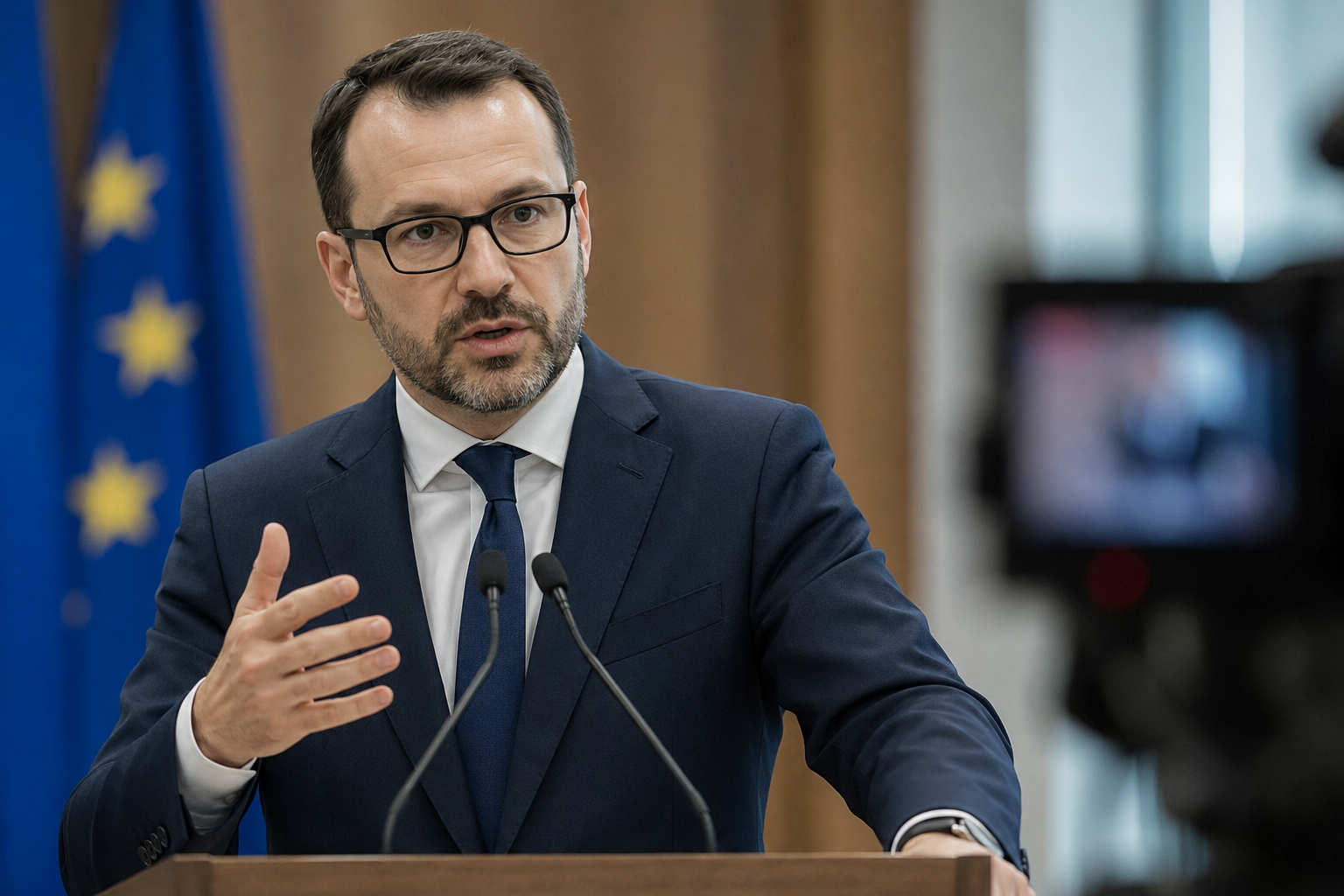
Winning office and performing well in office are different achievements.
An election establishes political authority under a particular constitutional system. It does not, by itself, demonstrate that the person who wins will interpret evidence well, tolerate disagreement, use advisers effectively, communicate uncertainty responsibly or make sound decisions when pressure rises. Campaigning and governing overlap, but they are not the same performance problem. A campaign rewards visibility, contrast, message discipline, coalition building and mobilisation. Public office adds different demands: legal constraints, institutional procedures, competing interests, incomplete information, long time horizons and decisions whose consequences may extend beyond the next election.
That difference is the starting point for what ALTIUS calls political performance. Political performance is not an ideology, an electoral formula or a judgement about which political programme is correct. It is a human-performance framework for examining how a person exercises public authority under pressure, uncertainty and institutional constraint.
Political performance is more than presentation
The phrase can sound theatrical. Politics obviously contains visible performance: speeches, interviews, debates, parliamentary exchanges and public appearances. Those moments matter because public leaders have to explain choices, respond to scrutiny and communicate when the facts are difficult or incomplete. But presentation is only one layer. A politician can deliver a polished answer while making a poor decision. Another can communicate awkwardly while reaching a defensible judgement through a careful process. Popularity can rise after a decision that later proves costly; an unpopular decision can sometimes rest on stronger evidence or legitimate obligations.
Political performance therefore cannot be reduced to charisma, confidence, polling or the ability to dominate a news cycle. A more demanding assessment looks at the process behind public action: What information reached the decision-maker? Which assumptions were challenged? How was uncertainty handled? Were legal and institutional constraints respected? Could advisers disagree safely? Was the decision revised when evidence changed? How was the choice explained to the public?
These questions do not decide whether a policy is left-wing, right-wing or centrist. They examine the quality of the process through which public power is exercised. ALTIUS organises political performance around five connected dimensions. This is an editorial and practitioner framework, not a validated psychometric scale and not a ranking system for politicians.
Judgement
Political leaders make decisions in environments where evidence is incomplete, interests conflict and outcomes are uncertain. Judgement includes problem definition, evidence use, risk assessment, prioritisation and the capacity to change course when circumstances change. This matters because poor decisions often begin before an option is selected. A problem can be framed too narrowly. Evidence can be filtered. A preferred explanation can become difficult to abandon. An urgent signal can displace a more important but slower-moving issue.
The OECD's 2026 work on trust and complex public decision-making highlights evidence use, integrity, responsiveness and collaboration as important features of how citizens assess government handling of difficult long-term issues. That does not create a universal formula for good government, but it reinforces a practical point: decision quality depends on more than decisiveness. It depends on how evidence, trade-offs and public input are handled.
Self-regulation
Public leadership repeatedly exposes people to criticism, conflict, interruption, uncertainty and reputational threat. Stress does not make every person irrational, and the effects of pressure vary by individual, task and timing. Research on acute stress and executive functions is more nuanced than a simple claim that pressure destroys thinking. A meta-analysis of acute stress studies found average impairments in working memory and cognitive flexibility, with more complex effects on inhibition. Later reviews have emphasised moderators and substantial variability across tasks and people.
For political performance, the practical implication is modest but important: leaders remain subject to ordinary human cognitive limits even when the consequences of their decisions are unusually large. Self-regulation therefore means more than looking calm. It includes recognising when irritation, fatigue, threat or urgency is changing listening, attention or the ability to revise an initial interpretation. A composed face is not evidence of good judgement.
Communication
Political communication is often discussed as persuasion. In public office it also has an accountability function. Leaders have to explain decisions, describe uncertainty, answer questions, listen to criticism and distinguish what is known from what remains contested. Communication performance is therefore not simply message discipline. A leader who repeats a line perfectly while avoiding the substance of a legitimate question may be performing the script without performing the public role well.
The useful standard is whether communication helps citizens, institutions and colleagues understand the reasoning, constraints and responsibilities surrounding a decision. This does not require the removal of political disagreement. Democratic politics depends on disagreement. It requires enough clarity that disagreement can be about the real issue rather than a manufactured substitute.
Institutional and relational leadership
No political leader governs alone. Decisions move through advisers, officials, legislatures, departments, regulators, courts and other institutions depending on the jurisdiction. Political performance therefore includes the capacity to use expertise and authority without collapsing every process into personal control.
The UK's current Code of Conduct for Special Advisers offers one concrete illustration of institutional boundaries. It permits special advisers to provide advice, long-term policy thinking and political assistance while stating that they may review and comment on advice prepared for ministers but must not suppress or supplant civil-service advice. The details are specific to the UK system, but the underlying principle is broader: political counsel and institutional expertise have different roles, and good decision systems make those roles visible.
A leader's relationship with dissent matters here. If disagreement is routinely punished, information becomes distorted before it reaches the top. People learn which facts are welcome and which are dangerous to raise. The resulting problem is not merely interpersonal. It affects the quality of the decision environment. Research on psychological safety and speaking up, particularly in safety-critical settings such as healthcare, has repeatedly linked the ability to voice uncertainty and concerns with learning and error detection. Political institutions are not operating theatres, but the general lesson is relevant: systems perform differently when people can surface bad news early.
Sustainability
Political work can create prolonged demand: travel, public scrutiny, crisis response, irregular schedules, long meetings and repeated high-stakes decisions. Sustainability does not mean making politics comfortable. It means recognising that decision quality is affected by the human system making the decision. A political organisation that depends on permanent urgency may eventually normalise poor preparation, fragmented attention and reactive communication. Recovery, workload design, delegation and decision routines therefore belong inside a performance framework. They are not lifestyle decoration.
The question is whether the person and the system can continue producing sound work over time without relying on chronic overload as proof of commitment.
Campaigning and governing reward different behaviours
Some campaign skills transfer directly to government: communication, coalition building, strategic prioritisation and the ability to operate under scrutiny. Other incentives change. Campaigns compress complexity into choices that voters can recognise. Government has to deal with the complexity that remains after the slogan. Campaigns benefit from contrast. Governing often requires cooperation with people who opposed the winning side.
Campaigns reward speed during fast-moving events. Public administration often requires procedure, consultation, legal review and implementation capacity. None of this makes campaigns superficial or governments purely technocratic. It means success in one environment does not automatically establish mastery in the other. Political preparation that focuses only on winning therefore leaves part of the job untouched.
In my work, the useful question is rarely whether a political leader knows the prepared answer. Most people at that level can learn a message. The more revealing question is what remains available when the conditions become difficult. Can the person listen while being challenged? Can they separate an attack on an argument from a threat to identity or status? Can they pause long enough to identify the actual question rather than answering the accusation they expected?
Can they say that evidence is incomplete without filling the space with false certainty? These are performance questions rather than clinical ones. They concern observable behaviour under demand. A difficult interview is therefore useful not because it reproduces every feature of governing, but because it can reveal patterns: interruption, over-explanation, defensiveness, loss of attention or retreat into memorised language. The purpose of preparation should be to make those patterns visible and train alternatives — not to manufacture a personality that does not exist.
Political performance is not personality assessment
Public discussion often reduces leaders to broad traits: strong, weak, charismatic, authentic, intelligent, decisive. Those words are attractive because they are simple. They are weak explanations of performance. A trait can be useful in one context and costly in another. Confidence can stabilise a team or harden an error. Caution can protect against reckless action or become paralysis. Emotional restraint can support judgement or prevent a leader from responding to important human information.
Political performance therefore focuses on behaviour and conditions rather than trying to infer a person's inner essence from public appearances. That boundary also matters ethically. It is inappropriate to diagnose public figures from media clips or speculate about their mental health, intelligence or private motives as though those were established facts. A professional analysis can examine what was said, what was done, what information was available and how a process operated without pretending to know the person's mind.
Political leaders receive advice from people with different roles and incentives: civil servants, political advisers, party staff, policy specialists, communications teams, legal advisers, consultants and informal confidants. The existence of advice does not guarantee good judgement. A useful system distinguishes evidence from interpretation, makes conflicts of interest visible and creates a legitimate route for disagreement. The UK Special Advisers' Code is again instructive because it explicitly separates politically committed advice from the impartial civil-service function. Ministers remain accountable for decisions; advisers occupy defined roles rather than inheriting public authority by proximity.
This is one reason political performance cannot be reduced to individual resilience or communication skill. A leader surrounded by weak information systems remains vulnerable no matter how disciplined they appear personally. The quality of the leader is partly visible in the quality of the system they permit around them.
Training should reveal behaviour, not conceal it
There is a legitimate concern about political coaching: it can become image management designed to make someone appear calmer, warmer or more authentic without changing the underlying behaviour. That is not the standard used here. Responsible political-performance work should make gaps harder to hide. If a leader claims to value disagreement, can they listen when challenged? If they present themselves as evidence-led, what happens when evidence threatens a preferred position? If they claim discipline, does that discipline survive fatigue and provocation?
If they speak about accountability, can they acknowledge a mistake without immediately transferring blame? The purpose is not to teach a politician how to simulate qualities for voters. It is to test whether useful behaviours are actually available under pressure. A person can be disciplined, persuasive and strategically effective while pursuing goals others consider harmful or while using methods that violate legitimate rules. For that reason, competence alone cannot define political performance. In democratic systems, authority operates within law, institutional responsibility and standards of public conduct. The UK's Ministerial Code, for example, sets formal expectations for ministerial conduct and accountability. Other jurisdictions use different constitutional and ethical structures.
Political-performance analysis should therefore remain jurisdiction-aware and nonpartisan. It can examine whether processes respect applicable rules and whether conduct matches declared responsibilities. It should not pretend that human-performance techniques can determine which political ideology citizens ought to choose. People make those political choices themselves.
What political performance is — and is not
Political performance is a way of examining the human side of public authority. It asks whether judgement remains usable under pressure, whether communication reflects the real decision, whether advisers can challenge assumptions, whether institutions are used rather than bypassed, and whether the person and system can sustain responsible decision-making over time. It is not a score for ranking politicians. It is not an electability model.
It is not psychological diagnosis from a distance. It is not partisan strategy disguised as science. And it is not a claim that good process guarantees a good outcome. Its value is narrower and more practical: it gives us a language for examining how public authority is exercised when the environment becomes difficult. That standard is demanding because it asks more than whether a leader can win, speak or project confidence. It asks whether the qualities required for responsible public action remain available when pressure, uncertainty and power make them hardest to use.
ALTIUS Note
The five-dimension Political Performance framework in this article is an ALTIUS editorial and practitioner framework. It is not a validated diagnostic instrument, an electoral rating system or a partisan model. ALTIUS does not use it to endorse, rank or predict political candidates or parties.
Research References
- OECD. (2026). OECD Survey on Drivers of Trust in Public Institutions 2026 Results — Views of government decision making on complex policy issues and trust. https://www.oecd.org/en/publications/oecd-survey-on-drivers-of-trust-in-public-institutions-2026-results_9eb63fec-en/full-report/views-of-government-decision-making-on-complex-policy-issues-and-trust_320eee17.html
- Shields, G. S., Sazma, M. A., & Yonelinas, A. P. (2016). The effects of acute stress on core executive functions: A meta-analysis and comparison with cortisol. Neuroscience & Biobehavioral Reviews, 68, 651–668. https://doi.org/10.1016/j.neubiorev.2016.06.038
- Plieger, T., Reuter, M., et al. (2020). Stress & executive functioning: A review considering moderating factors. Neurobiology of Learning and Memory, 173, 107254. https://doi.org/10.1016/j.nlm.2020.107254
- Cabinet Office. (2026). Code of Conduct for Special Advisers. https://www.gov.uk/government/publications/special-advisers-code-of-conduct/code-of-conduct-for-special-advisers-html
- Cabinet Office. (2026). Ministerial Code. https://www.gov.uk/government/publications/ministerial-code/ministerial-code
- O'Donovan, R., & McAuliffe, E. (2020). A systematic review exploring the content and outcomes of interventions to improve psychological safety, speaking up and voice behaviour. BMC Health Services Research. PubMed PMID 32041595. https://pubmed.ncbi.nlm.nih.gov/32041595/
Related from ALTIUS
- What Is Leadership? — A foundational ALTIUS essay on leadership, responsibility and judgement.
- What Is Decision Making? — How judgement changes with attention, experience, emotion and uncertainty.
- A Political Consultant Is Not Paid to Tell the Candidate They Are Right — Why useful political advice depends on independence and disagreement.
- What a Politician Is Really Buying When They Hire a Consultant — Political counsel as decision infrastructure rather than image management.
Further reading
Keep reading ALTIUS
Subscribe for new essays and analysis, or sign in if you already have an account.