Training in the Heat: From a Problem to a Potential Tool for Improving Performance?
Training in high temperatures creates additional strain. When carefully planned, however, repeated heat exposure may increase haemoglobin mass and become a deliberate training stimulus.
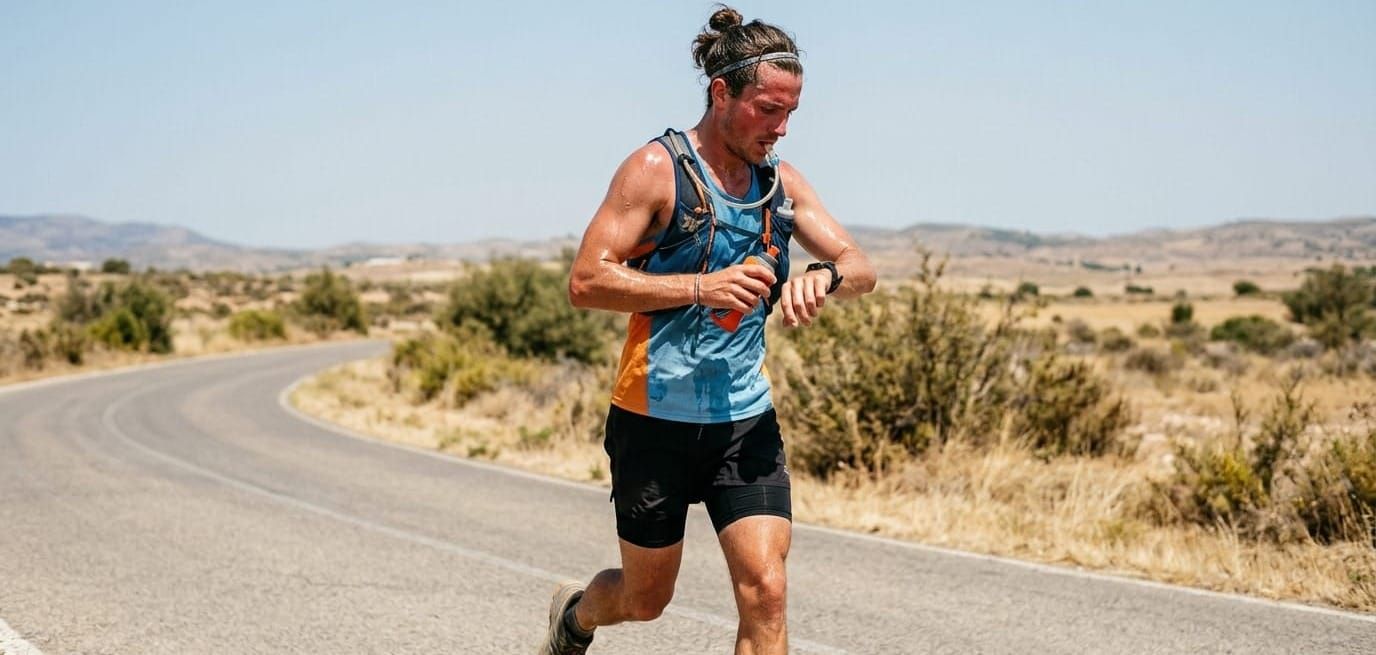
Increasingly high summer temperatures are also changing the way athletes train. This is particularly relevant for football, rugby, basketball and other team sports that begin pre-season training in August, precisely when prolonged periods of intense heat can occur. It also affects endurance athletes who need to continue training throughout the summer.
Heat is, first and foremost, an additional stress on the body. Core temperature, sweating and cardiovascular strain increase, while the ability to sustain high-intensity exercise and the overall quality of training may decline. Scheduling training sessions at appropriate times, hydration, recovery and workload monitoring therefore become essential.
However, there is another, less well-known aspect: when used in a planned and controlled way, heat itself can become a training stimulus.
In recent years, several studies have shown that repeated exposure to heat not only produces the well-known increase in plasma volume but, when continued for several weeks, can also lead to an increase in total haemoglobin mass (Hbmass)—the total amount of haemoglobin available to transport oxygen to the muscles.
In elite cyclists, Rønnestad et al. (2021) found that five weeks of heat training produced an increase in haemoglobin mass of approximately 4.6%. This is particularly interesting because it is similar in magnitude to the adaptations achieved through effective periods of altitude training.
Other studies have reported increases of around 3% after three weeks and 4% after five weeks of systematic heat exposure. Overall, the available evidence suggests that approximately 3–6 weeks of heat training may increase Hbmass by an average of 3–5%, although there is considerable individual variability.
A recent analysis by Lundby and Robach (2025) directly compared heat training with altitude training, concluding that repeated heat exposure can produce haematological adaptations of a magnitude comparable to those observed following altitude training camps, although the effects on performance are more variable.
A further 2026 study, involving 46 trained cross-country skiers and biathletes, showed that three weeks combining moderate altitude with heat training resulted in a 2.9% increase in Hbmass, compared with 1.2% with altitude alone and −0.2% in the control group. Once again, however, the greater haematological adaptation did not automatically translate into a significant improvement in performance.
This is a crucial point. A 4% increase in haemoglobin mass does not mean a 4% improvement in performance. The human body is far more complex, and performance depends on the interaction of physiological, technical, psychological and environmental factors.
For team sports, the issue is even more delicate. Summer pre-season training conducted in high temperatures cannot automatically be considered a heat-training programme. If the heat excessively reduces training quality, increases fatigue or compromises recovery, the potential physiological adaptation may come at the cost of poorer physical and technical work.
The question therefore becomes particularly relevant: How can we transform heat from an unavoidable problem of summer training into a training variable that can be managed deliberately?
For teams beginning their season in August, this means, first of all, monitoring temperature, humidity, hydration, perceived exertion and recovery, while adjusting the duration and intensity of training sessions accordingly. For endurance sports, heat training can instead be incorporated as a specific intervention within the overall training programme.
Climate change will increasingly force athletes to train and compete in conditions of high heat. Research suggests that we should not consider it solely an enemy of performance.
Heat remains a stressor that must be managed carefully, but when properly dosed and planned, it can also become a stimulus capable of producing adaptations that may benefit performance.
Key References
Rønnestad et al. (2021); Lundby and Robach (2025); Physiological Reviews, review on adaptations to heat acclimation; 2026 study on cross-country skiers and biathletes examining the combination of altitude and heat training.